
“Awakenings” — Madras, 1996: A Conversation About Healing
Aug 07, 2026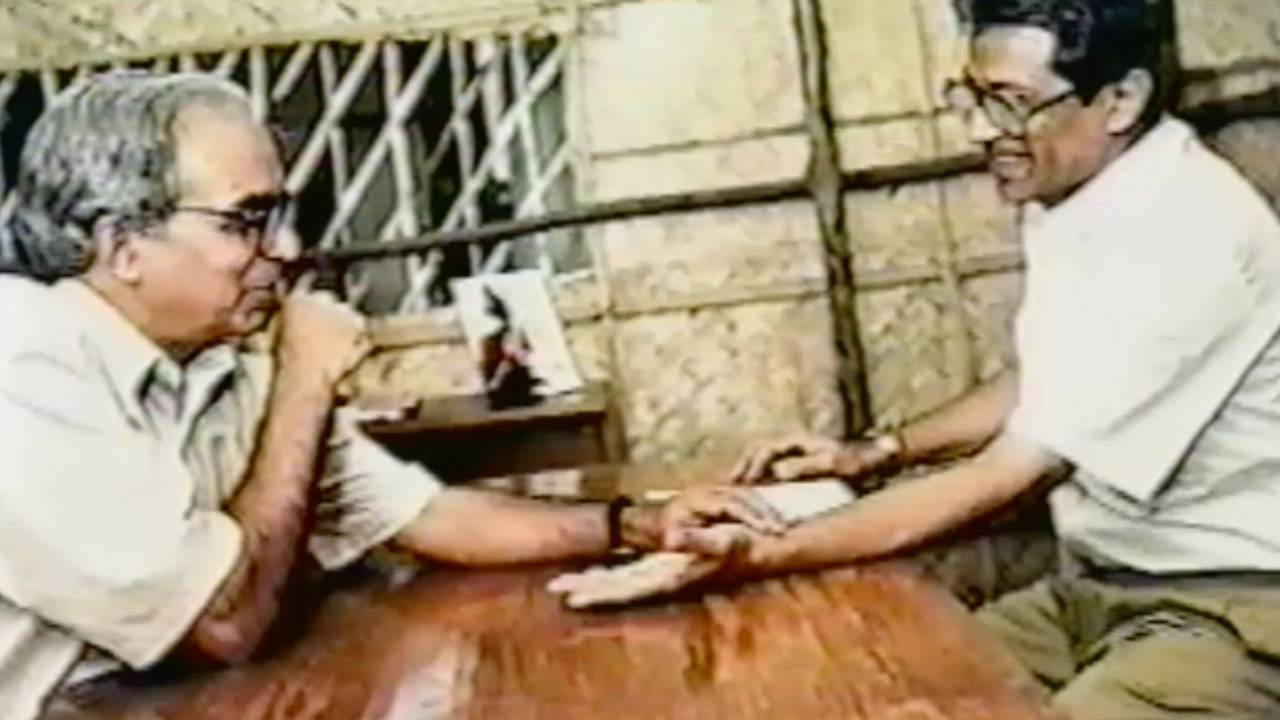
For nearly thirty years, I’ve been showing a short clip (below) in many of my workshops. It features Desikachar sitting in his office at the Krishnamacharya Yoga Mandiram in Madras (Chennai) in 1996, speaking about suffering and healing:
“The most important problem is suffering… They (doctors) know a lot about the disease… But the relationship between this illness and the person is not so much emphasized…”
This clip succinctly captures what I believe was one of Desikachar’s most important contributions. He wasn’t criticizing modern medicine. In fact, he respectfully acknowledges how much it understands about disease. His point is that disease and suffering are not the same thing, and that medicine necessarily studies pathology, while Yoga has a different emphasis. We begin by asking about the person’s relationship to what has gone wrong, but we also encourage them to recognize everything in themselves that is still going right. With that perspective, he insisted, healing was possible.
“…We talk to these people. We say: ‘You have resources that are not just medicine, but something you already have. You can still breathe, you can still talk, you can sit and move. That means you still have the energy that can heal you!’”
That insight has profoundly influenced my own teaching for decades, which is why those few minutes of video have appeared in so many of my workshops. However, what I’ve never done, until now, is share the complete context from which his words emerged.
The day I post this, August 8, 2026, marks the tenth anniversary of Desikachar’s death.
In honor of my teacher, it occurred to me that this entire 36-minute film deserved to be seen, not simply the small portion I’ve been showing for the past thirty years.
The mini-documentary Awakenings has an interesting history of its own.
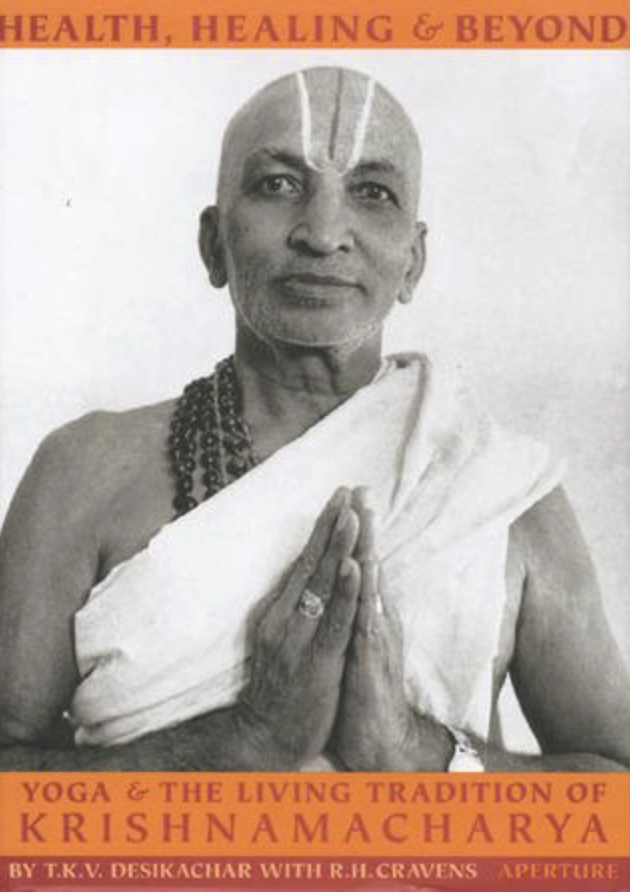 In the early 1990s, I introduced Desikachar to my dear friend Michael Hoffman, Executive Director of the Aperture Foundation in New York. Michael immediately hit it off with Desikachar and recognized that his work deserved a much wider audience. He arranged for writer and editor R.H. (“Dick”) Cravens to spend an extended period living in Madras, meeting daily with Desikachar. Their collaboration eventually produced the remarkable book Health, Healing and Beyond: Yoga & the Living Tradition of Krishnamacharya, published by Aperture in 1998.
Cravens was originally hired as an uncredited ghostwriter. After reading the first draft, however, Desikachar insisted that Dick be listed as a full co-author. He realized that anyone familiar with his English would immediately recognize that the elegant prose was not his own. More importantly, he refused to take sole credit for a book that had been shaped so substantially through a genuine collaboration.
That collaboration naturally led Michael to a second, far more ambitious, idea. He wanted to create a book exploring healing itself by bringing together respected representatives of several great traditions. Yoga would be one voice among many healing systems. Tibetan medicine, Ayurveda, traditional Chinese medicine, Anthroposophic medicine, modern neuroscience, alternative cancer therapies, and other disciplines would all have a place in the conversation.
Rather than begin by assigning chapters to various specialists, Michael wanted the contributors to meet one another. His hope was that an extended face-to-face conversation would reveal common themes, unexpected points of agreement, and perhaps even entirely new questions that could shape the book before a single page was written. A private symposium was conceived as the foundation for the publication.
The gathering was originally planned for February 1996 at Esalen in Big Sur, where Michael had a long track record of cultivating exactly this kind of interdisciplinary dialogue. He recruited me as the technical coordinator because of my background in audiovisual production, as well as my relationship with Desikachar, his guest of honor.
Everything was arranged. Participants had accepted their invitations, airline tickets were being issued, we hired a videographer, and we were well into the final preparations when, in December of 1995, Desikachar informed us that he would not be traveling to California for the event. He explained that he couldn’t adequately represent his father’s teachings outside India (Krishnamacharya, for all of his global influence, never crossed the ocean.) If this gathering was going to take place, he believed it belonged at the Krishnamacharya Yoga Mandiram in Madras, down the street from his family’s home where his father had lived and worked in the final decades of his very long life.
Anyone who knew Desikachar will smile at that story. He was sometimes referred to as the “Professor of Pariṇāma” because he rarely hesitated to change direction when he felt circumstances required it. It wasn’t unusual for the advertised topic of a workshop—or even an entire teacher training—to disappear during the opening session, replaced by what he believed the students actually needed.
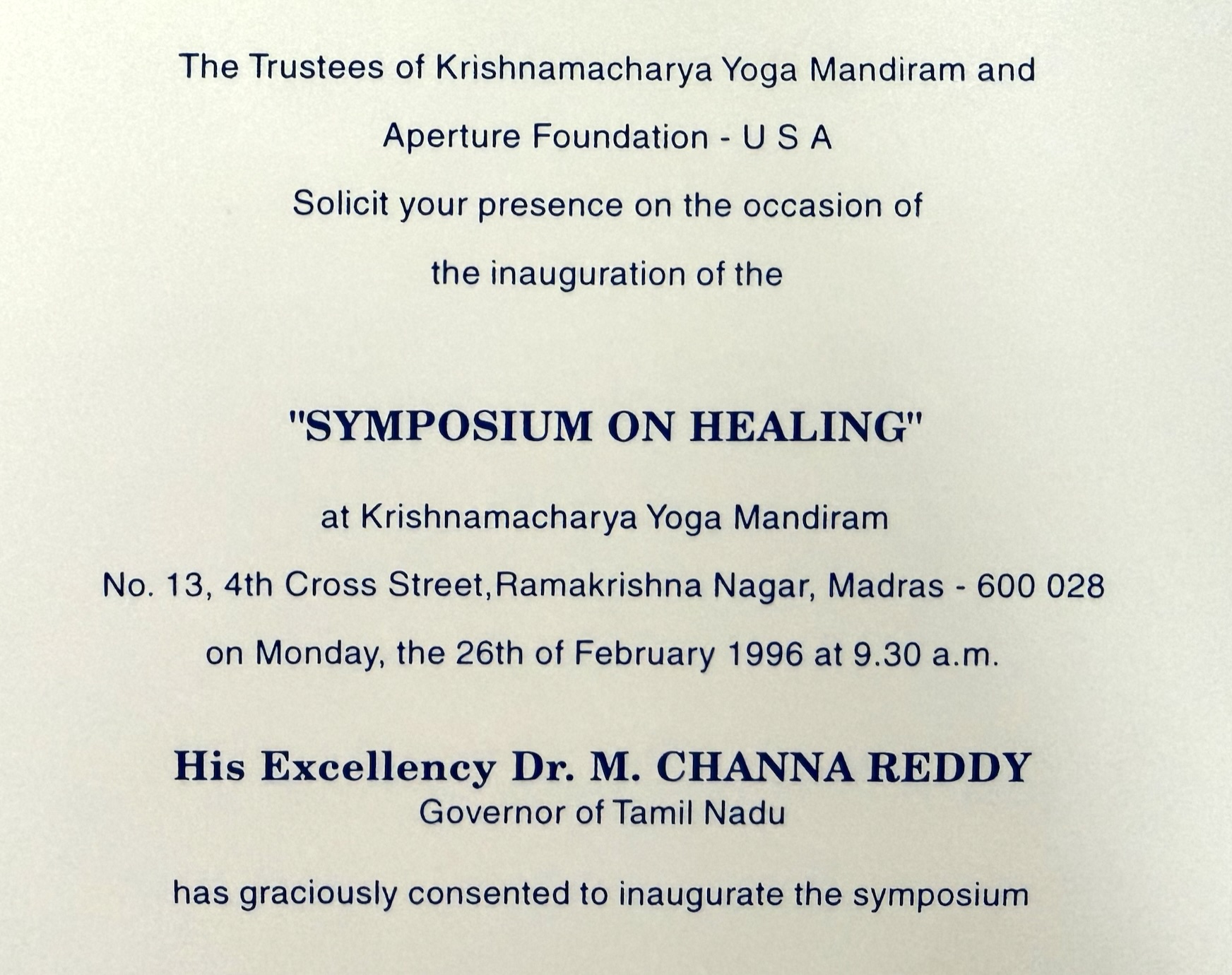 So Michael and I did what everyone around Desikachar eventually learned to do. We adapted.
We cancelled one location, reorganized for another, rerouted flights, rebooked accommodations, and moved the entire event halfway around the world.
It was worth it, and I hope the video I’m sharing with you can give you a taste of of why.
Using the video footage we gathered in Madras, Awakenings was produced to help raise funds for the proposed healing systems book of the same name. As a nonprofit publisher, Aperture depended on project-specific fundraising to support ambitious undertakings of this kind, and Michael was exceptionally creative in finding ways to bring them to life.
The Awakenings book languished in production for several years and was never published. Michael passed away in November 2001. Dick Cravens died in April 2009. Along with Desikachar, most of the presenters featured in this film have also left us. You can see the list of invitees below, with brief bios.
I consider it both an honor and a responsibility to be the caretaker of what I believe is the only surviving copy of Awakenings. I can’t think of a more fitting tribute to Desikachar, Michael, Dick, and everyone else who made this extraordinary gathering possible than to finally share it with the world today.
CONFERENCE PARTICIPANTS:
Tenzin Choedrak — Dharamsala, India
Born in Shigatse (Tibet) in 1924, Tenzin Choedrak was the Dalai Lama’s senior personal physician and one of the foremost practitioners of traditional Tibetan medicine. After the Chinese occupation of Tibet, he was arrested in 1959 and spent nearly 22 years in Chinese prisons, where he survived torture, starvation, and forced labor. Released in 1979, he escaped to India, resumed his role as the Dalai Lama’s physician, and helped preserve and teach Tibetan medicine in exile until his death on April 6, 2001.
T.K.V. Desikachar — Madras, India
T.K.V. Desikachar is a widely respected pioneer in the use of yoga to treat the disabled and the mentally ill. Desikachar is the son and student of T. Krishnamacharya, recognized as one of the greatest healers and sages of modern Indian history. Desikachar and his faculty in Madras taught more than 15,000 individuals; in addition, he trained teachers from the Americas, Asia, Europe, and Australia. He was a widely traveled lecturer, translator, and author, whose works include Patañjali’s Yoga Sutras and Religiousness in Yoga. He died at home on August 8, 2016.
Claude Maréchal — Liège, Belgium
Claude Maréchal, born 1938, is widely regarded as one of the earliest and most influential European students of T.K.V. Desikachar and one of the principal transmitters of the Krishnamacharya–Desikachar tradition in Europe. He is the founder of the ETY (Étude et Transmission du Yoga) schools and has trained several generations of teachers in Belgium, France, Spain, Switzerland, Italy, and Québec.
Philip Incao — Ghent, New York
Dr. Incao received his M.D. from Albert Einstein College of Medicine in 1966, and studied anthroposophical medicine in Forest Row, England, and Arlesheim, Switzerland. He was one of the principal practitioners of anthroposophical medicine in the United States, working in a variety of specialties, from pediatrics to geriatrics and chronic diseases. Dr. Incao was the medical director of Camphill Village, a unique community residence in New York State for adult mentally handicapped persons. He died on Feb. 28, 2022 at age 81.
Zheng-Fei Lin — Portland, Oregon
Dr. Lin was trained in China and continues her practice of traditional Chinese medicine, with practical experience in the four branches of that discipline. She was a founder in 1984 of the Shanghai International Hospital of Rehabilitation, where she researched traditional Chinese medicine in relation to neurological disorders, soft tissue and pain problems, degenerative spinal conditions, and pediatric Tui Na manipulation for infant disorders. Dr. Lin has published many articles in Chinese medical journals, and served on the faculty of the Seattle Institute of Oriental Medicine.
Dr. R. Ramamurthi — Madras, India
A world-class neurosurgeon practicing in India, Dr. Ramamurti was also on the board of the Krishnamacharya Yoga Mandiram in Madras.
Dr. I. Sanjeeva Rao — Hyderabad, India
Dr. Rao is a graduate of the College of Integrated Medicine with a degree in Ayurveda and Modern Medicine and is currently a member of the Central Council of Indian Medicine and the Chairman of the Regulation for the Council. He is a member of the Governing Body of the National Academy of Ayurveda, is on the Scientific Advisory Committee of the National Institute of Ayurveda, Jaipur and is a member of the governing body of the Addiction Research Centre, Adyar, Madras. He is an advisor to the Arya Vaidya Pharmacy, Coimbatore and an advisor to the National Ethno-Botanical Research Institute, Trivandrum, which is an autonomous undertaking under the aegis of the Department of Science & Technology, Kerala. He died on February 28, 2010.
Jnani Chapman, R.N. — Bolinas, California
A long time yoga teacher and practitioner, Jnani Chapman is currently Senior Massage Therapist on the Commonweal Cancer Help Program. She was also the Executive Director of the International Association of Yoga Therapists. She died on December 14, 2017.
Fredi Kronenberg, PhD — New York, New York
Fredi Kronenberg, PhD, was an American physiologist and pioneering researcher in complementary and integrative medicine. Born in the Bronx, she earned a B.S. from Cornell University and a Ph.D. in physiology from Stanford University before joining Columbia University, where she founded and directed the Rosenthal Center for Complementary and Alternative Medicine. Her research focused on women’s health—particularly menopause—and on the scientific evaluation of herbal and traditional medical practices. Widely respected for bringing rigorous scientific methods to the study of complementary medicine, she remained an influential advocate for evidence-based integrative healthcare until her death on April 20, 2017.
R.H. Cravens — Albuquerque, New Mexico
Formerly an editor for Associated Press and Time-Life Books, R. H. Cravens worked with Aperture for more than twenty years as an editor and writer for many significant projects and publications. Cravens worked closely with T.K.V. Desikachar on "Health Healing and Beyond," a major book about the pioneering philosophies of Desikachar’s father, T. Krishnamacharya, and the living traditions of yoga as taught and practiced today. He died in April of 2009.
Michael E. Hoffman — New York, New York
Executive Director of the Aperture Foundation, Michael Hoffman was also the founder of the Alfred Stieglitz Center at the Philadelphia Museum of Art and adjunct curator of the Museum’s Department of Prints, Photographs and Drawings. He was responsible for more than 400 Aperture publications over the thirty years of his tenure, 100 issues of the periodical as well as Aperture and the Philadelphia Museum of Art’s worldwide exhibition program, including forty-five large-scale international exhibitions utilizing photography. He was been closely associated with many of the major photographers of our time. He initiated and directed the two Esalen Symposia held in 1982 and 1988, as well as their resulting publications. He died in New York City on November 23, 2001.
Leslie Kaminoff — New York, New York
Leslie Kaminoff is a yoga educator inspired by the tradition of T.K.V. Desikachar. He is an internationally recognized specialist in yoga and breath anatomy, and has led workshops for many of the leading yoga associations and schools in America. He currently practices bodywork in New York City and teaches worldwide.
Nick Waplington — London, England
British photographer Nick Waplington published a number of books with Aperture, including Living Room, an intimate study of two families living in “council housing” in Nottingham, England; Other Edens, a poetic and fascinating series of panoramic self-portraits and The Wedding, published in the spring of 1996. Waplington has received several prizes for his photographic work, including the British and European Kodak Awards, and the ICP Young Photographer Award for 1993.
The beautiful music used in the video deserves credit:
Shaman's Column - David Hykes & Djamchid Chemirani
Kyrie - Harmonic Meetings - David Hykes and the Harmonic Choir
Sankarabaranam Pancha Nadai Pallavi - L. Shankar & The Epidemics - Passion Sources
If you have received value from my writing, please consider supporting it by subscribing to my online community. You will gain access to my online courses, monthly Q&A Zoom chats, and hundreds of hours of educational content.
Stay connected with news and updates
Join our mailing list to receive news and updates from Leslie.
Don't worry, your information will not be shared.
We hate SPAM. We will never sell your information, for any reason.