
The Fragile Spine Myth: What We’ve Been Getting Wrong About Bones
Apr 21, 2026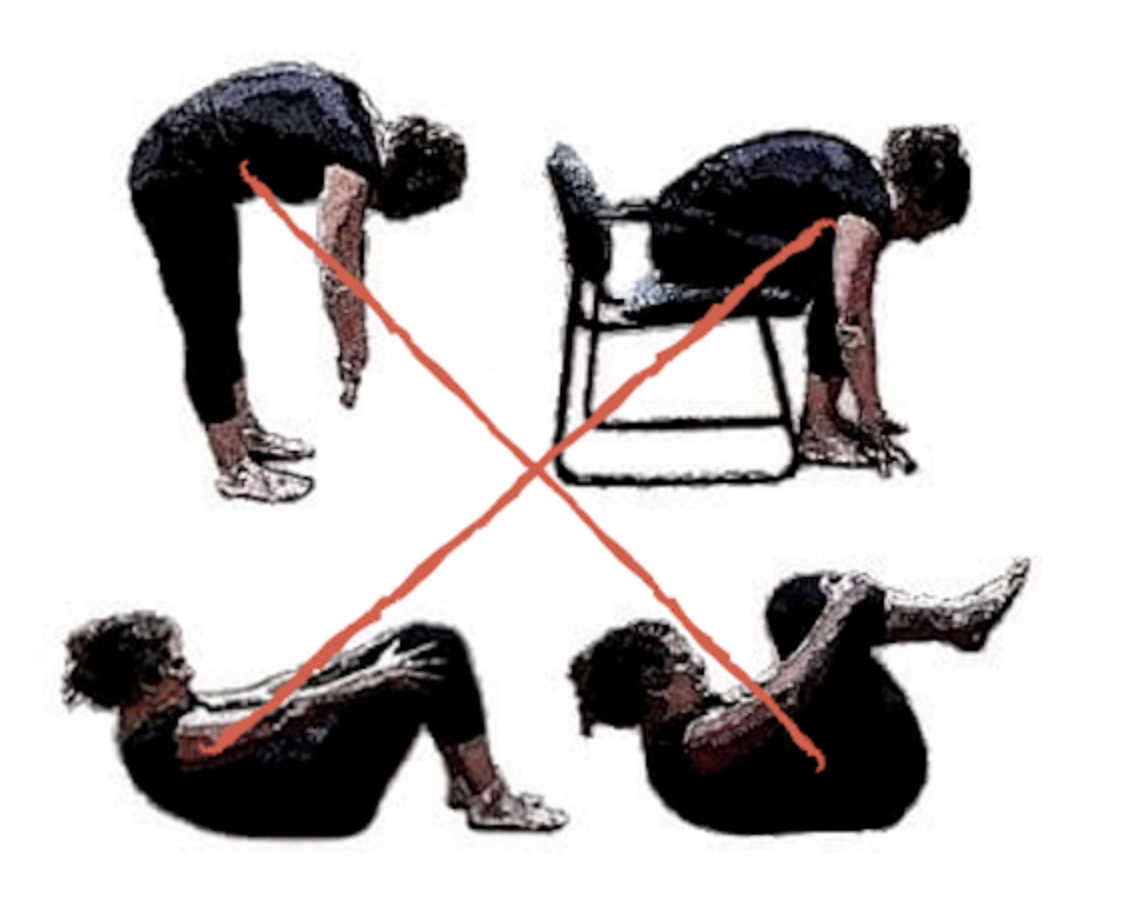
The Fragile Spine Myth: What We’ve Been Getting Wrong About Bones
For decades, we’ve been told not to bend our spines. Don’t round forward. Don’t flex under load. Keep a neutral spine at all costs—especially if bone density is a concern. The message is delivered through cueing language with certainty, as if it were grounded in settled science. It is not. These ideas are the product of a very specific finding from a single flawed study, pulled out of context and expanded into a general rule.
Here is a segment from my Zoom session on April 21, 2026 in which I address the question that led to the creation of this post.
The origin of this idea can be traced to a single study: Sinaki & Mikkelsen, 1984 https://pubmed.ncbi.nlm.nih.gov/6487063/
The subjects were postmenopausal women with osteoporosis, many of whom already had vertebral compression fractures. One group performed repeated spinal flexion exercises. Another performed extension exercises. Over time, the flexion group showed a higher rate of additional fractures. When you break down the actual number of subjects involved in this study, we find that a global prohibition against spinal flexion is largely based on a result from roughly 15 high-risk subjects in a single small study!
That result has echoed for forty years. But what it actually shows is quite narrow: repeatedly loading already-fractured vertebrae in flexion *may* increase the risk of further fracture. That’s a specific condition. It is not a general principle of human movement. It does not describe healthy spines, or even most osteopenic ones. It certainly does not justify a universal prohibition against bending forward.
Somewhere along the way, the distinction was lost. A conditional finding became a categorical rule. Flexion became dangerous. Extension became therapeutic. The human spine—one of the most resilient, adaptable structures ever devised by nature—was rebranded as fragile.
The logic has become familiar: avoid flexion, avoid risk. But the underlying assumption—that flexion itself is the problem—simply does not follow from the evidence. A slow, unloaded roll-down in a yoga class bears little resemblance to the repeated, loaded flexion imposed on already-fractured spines in the Sinaki study. Treating them as equivalent is not caution. It’s a major category error, amplified into fear.
As I’ve been saying for years…movement educators who are willing to put people in fear of their own spine and its natural movements like flexion, should take their own advice for just one day, and see how it feels to live that way.
There is a deeper problem here, and it has to do with how we understand bone in the first place.
A more accurate framework begins with Wolff’s Law: “Bone adapts to the loads placed upon it.”
This is not philosophical. It is biological. Bone is constantly remodeling itself in response to mechanical stress. Where load is present, it reinforces. Where load is absent, it withdraws. Remove stress, and bone does not remain stable—it loses density, just like the astronauts who spend time on zero-gravity missions.
Once that is understood, the logic of “protecting” the spine by eliminating movement starts to collapse. Avoid flexion, and you reduce loading. Reduce loading, and you reduce the stimulus for remodeling. Reduce remodeling, and you increase fragility. The very strategy meant to prevent injury begins to create the conditions for it.
This is the paradox at the heart of the fragile spine narrative which the brilliant Peter Blackaby addresses in his discussion of spinal flexion and osteoporosis: Considerations when teaching spinal flexion to people with Osteoporosis.
The question, Blackaby suggests, is not whether flexion is safe or unsafe. It’s what kind of loading is appropriate, and how that load is introduced. Because bone doesn’t respond to movement labels. Bone responds to mechanical input. Three variables matter: how much force is applied, how quickly it’s applied, and how that force is distributed. Progressive resistance, impact, and variation all provide signals that bone can use to strengthen itself. Remove those signals, and adaptation slows or stops.
This is precisely where most styles of asana practice fall short—not because they are ineffective, but because they operate at a different level. Yoga is excellent at organizing movement, distributing load, and refining awareness. It can improve balance, coordination, and proprioception, all of which lead to an increased ability to sense and modulate effort. All of that matters a lot, especially for reducing fall risk. But most asana practice is low to moderate in load, slow in rate, and highly predictable in pattern. It can help to maintain tissue, but it rarely challenges it enough to drive significant structural change.
That doesn’t make yoga insufficient. It just makes it incomplete if the goal is bone remodeling.
The real issue is not that people are bending too much, or in the wrong direction. It’s that they are often not loading enough, and when they do load, it’s frequently in limited, repetitive ways. Restricting spinal flexion doesn’t solve that problem. It actually narrows the range of available, healthy stress even further.
Your spine is not the weak link it has been made out to be. It has evolved to move, to distribute forces across multiple tissues, and to adapt over time. When your motion is restricted out of fear, load is concentrated into fewer segments and your movements become less well-distributed. Your system becomes less resilient, not more.
None of this means that anything goes, as far a movement is concerned. Repeated, high-load flexion in a severely osteoporotic spine–or any spine for that matter–may indeed carry risk. But that is a question of dose, progression, and capacity, not of movement category. The informed attitude I suggest leads to careful exposure and adaptation. The alternative is fear, which eventually leads to avoidance and decline.
A small study on already-fractured spines performing repeated loaded flexion became a global rule against bending. That rule reshaped how people are taught to move, often discouraging natural, necessary motion. At the same time, the role of load in building bone has been underemphasized or ignored.
The result is an inversion of priorities: protecting people from movement they need, while failing to provide the stimulus their bones require.
To sum it all up:
Bone strengthens in response to load. The spine adapts to movement. Take those away, and fragility is not avoided. It is created.
If you have received value from my writing, please consider supporting it by subscribing to my online community. You will gain access to my online courses, monthly Q&A Zoom chats, and hundreds of hours of educational content.
I addressed this very issue in a 4 minute excerpt from a Q&A session we produced a few years ago. Enjoy.
Stay connected with news and updates
Join our mailing list to receive news and updates from Leslie.
Don't worry, your information will not be shared.
We hate SPAM. We will never sell your information, for any reason.