
Why You Really Don’t Want to Breathe Like a Baby, Part 3: Where Did “Babies Breathe Correctly” Come From?
Oct 18, 2026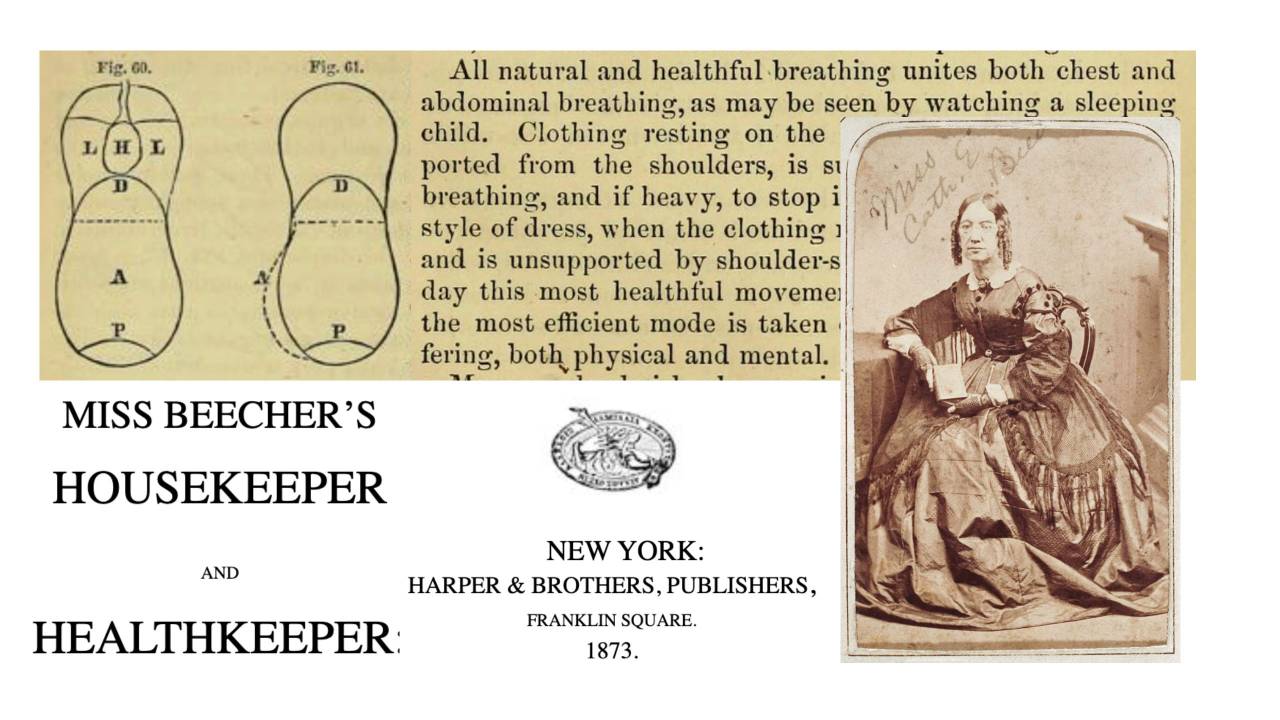
In parts one and two of this series, I looked at what babies actually do when they breathe, and why their respiratory physiology makes perfect sense for babies—but not as a model for healthy adult breathing. That left me wondering where the idea came from in the first place.
I was certainly taught it. When I took my first yoga teacher training in the Sivananda tradition in 1979, the idea that babies exemplified natural, healthy breathing was already well established. Watch a baby breathe: the belly moves freely while the chest remains relatively quiet. That’s diaphragmatic breathing. Adults, through stress, tension, poor posture and bad habits, lose this natural pattern and need to learn how to do it again.
I’ve heard versions of that story for nearly half a century, and I also repeated versions of it myself. So I started looking for the origins of the "breathe like a baby" narrative, and what I found was quite interesting.
My research took me back to the nineteenth century, when Western health reformers, physical culturists, physicians and voice teachers were increasingly distinguishing between “correct” and “incorrect” ways of breathing. They had some legitimate concerns back then. Tight clothing—particularly corsets—could restrict movement of the abdomen and lower ribs. Posture could alter respiratory mechanics. Singers and public speakers had obvious reasons to investigate breath control. Industrialization and increasingly sedentary lifestyles generated a broader concern that “civilized” human beings were losing natural physical capacities.
Within that environment, a powerful idea emerged: perhaps we are born knowing how to breathe properly, and civilization teaches us to do it wrong. And what better evidence could there be than a child?
The earliest explicit example I’ve been able to find of the "watch a baby breathe" idea comes from the fascinating 1873 book, Miss Beecher’s Housekeeper and Healthkeeper. Catharine Beecher (1800–1878) was a prominent American educator and writer who advocated for women’s education while opposing women’s suffrage, arguing instead that women exercised their proper influence through the domestic, not the political sphere. She was the older sister of Uncle Tom’s Cabin author Harriet Beecher Stowe, and the daughter of prominent minister Lyman Beecher.
On page 246, in the chapter on clothing, Beecher wrote:
“All natural and healthful breathing unites both chest and abdominal breathing, as may be seen by watching a sleeping child.”
The irony in this early example is that Beecher was not telling adults to immobilize their rib cages and push their bellies outward. She was saying almost the opposite. Her concern was that restrictive clothing interfered with the body’s ability to breathe freely, and she specifically described healthy breathing as involving both chest and abdominal movement.
Her proposed solution certainly looks peculiar from a twenty-first-century perspective. She wanted women to replace corsets with a looser jacket that was itself reinforced with “delicate whalebones.” But her prescription was actually pretty sensible: the garment should be loose enough that “a full breath can be inspired with ease while in a sitting position.” In the context of 1873 women’s clothing, that would have represented real progress.
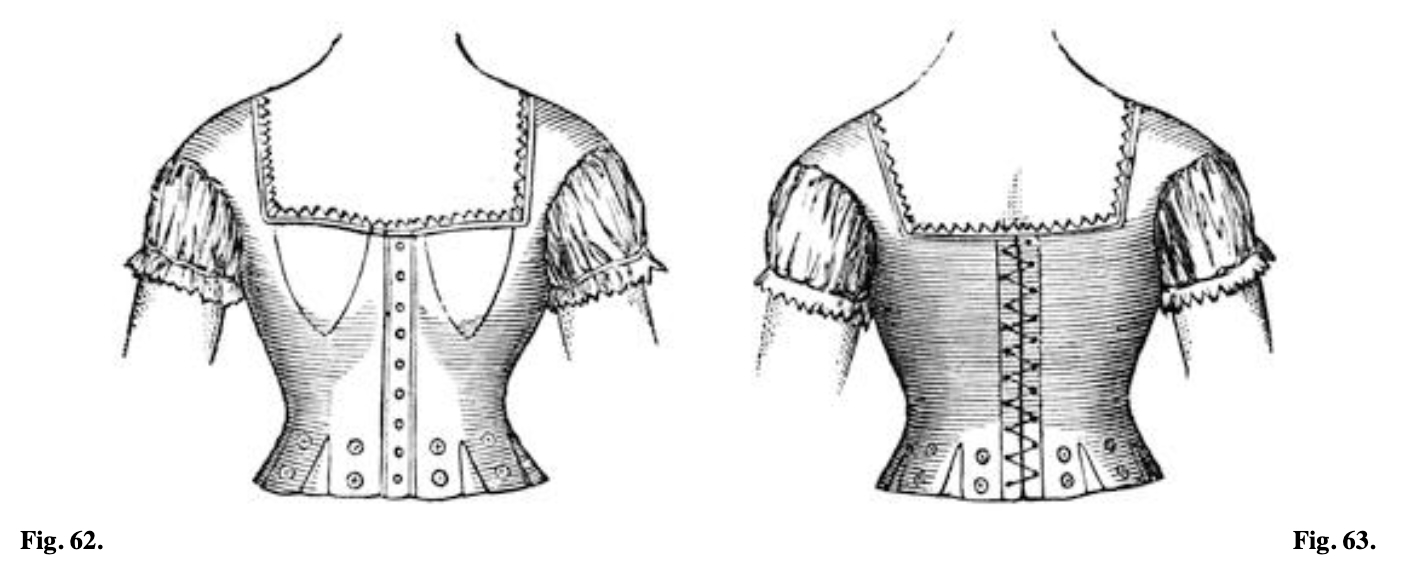
Nearly a century later, the same problem hadn’t entirely disappeared. Swami Vishnudevananda used to tell us about women arriving for his yoga classes in the 1960s still wearing girdles, which he had to persuade them to remove before practicing. The undergarment had changed, but clothing intended to reshape the female torso was still interfering with the freedom of breath and movement.
Beecher’s physiology elsewhere in the book can be questionable, and many of her social views—including her opposition to women’s suffrage—belong unmistakably to her time. Yet on this particular subject she actually sounds more reasonable than many of the people who promoted the “watch a baby breathe” idea after her.
Beecher doesn’t claim that the child’s breathing demonstrates one correct pattern that adults should reproduce. She merely points to the sleeping child as an example of what that unrestricted movement looks like. What happens over the following century is therefore curious. Rather than becoming more nuanced as respiratory physiology advanced, the message from breath educators became more rigid as observation gradually hardened into prescription.
From Natural Breathing to "Correct" Breathing
By the end of the nineteenth century, the language was already becoming more prescriptive. An 1898 health article declared:
“A child two years old breathes rightly just as she is.”
The article objected to teaching children to hold their abdomens in while breathing, so once again restrictive clothing and cultural habits were prominent villains. By 1903 another health publication advised readers:
“If we observe a child we will see that it breathes correctly.”
By this time, something has happened to the language. Beecher’s sleeping child demonstrated “natural and healthful” breathing involving freedom of both chest and abdomen. A generation later, the child is simply breathing correctly.
By attaching the word "correctly" to breathing, an increasingly familiar story emerges: we begin life breathing naturally, civilization interferes, we develop bad habits, and we therefore need to be taught how to recover the breathing pattern we once possessed instinctively.
If that sounds like something you’ve heard in a yoga class, it may be because of our old friend “Yogi Ramacharaka.” who, in 1904, wrote in The Hindu-Yogi Science of Breath:
“Like the lower animal and the child, he breathed naturally and properly, as nature intended him to do.”
The passage could easily have appeared in a twentieth-century yoga manual: children breathe naturally and properly, civilized adults have departed from nature, and breathing practice offers a way back.
“Yogi Ramacharaka” as I've previously pointed out, was actually William Walker Atkinson, an American lawyer, publisher and New Thought writer based in Chicago who produced a large body of occult, metaphysical and yoga-related literature under various pseudonyms.
That doesn’t make his ideas wrong, nor does it establish that later yoga teachers got the baby-breathing idea from him, but it is clear that by the beginning of the twentieth century, the proposition that children breathe naturally and adults have lost that capacity was already circulating in Western health culture and had entered highly influential literature presented to Western readers as yogic teaching.
Throughout rest of the twentieth century, variations of the natural-versus-learned breathing story appeared throughout physical culture, relaxation training, yoga, psychotherapy and bodywork, childbirth education, stress-management programs and respiratory training. Eventually the idea became so familiar that it no longer required much explanation: “Watch a baby breathe” became its own argument.
And it certainly didn’t remain confined to yoga. Consider this statement:“From the day you’re born, you know how to breathe correctly.”
That isn’t from a nineteenth-century health reformer or an old yoga manual. It’s from the Mayo Clinic's article “How Belly Breathing Benefits Your Body, Mind”, which presents the now-familiar narrative: diaphragmatic or belly breathing is the natural, efficient breathing pattern we possess at birth, while adults tend to shift toward less efficient chest breathing.
Cleveland Clinic offers similar advice in its discussion of breathing exercises for COPD: “If you ever watch a baby breathe, you’ll see their bellies moving up and down.”
The U.S. Department of Veterans Affairs goes right for the headline with “How to Breathe Like a Baby in Just 5 Minutes”.
This narrative has circulated through mind-body medicine for decades. In a 2000 Washington Post article by Carol Krucoff, physician James Gordon described adults as having lost the natural abdominal breathing they possessed as infants because of stress and conditioning. The list of citations for this idea could go into the thousands.
So if you’ve taught this idea, you’re in very good company. Unfortunately, being in good company doesn’t make the premise correct.
A Useful Technique Isn’t a Universal Breathing Pattern
There’s an important distinction I don’t want lost in this critique. None of this means that deliberately breathing slowly or allowing the abdomen to bulge is inherently useless or harmful.
Quite the contrary. Deliberate abdominal breathing can be a perfectly legitimate technique. Slow breathing practices can affect autonomic regulation. Pursed-lip breathing can be useful for some people with respiratory disease. Specific breathing exercises can be useful in rehabilitation, voice training, meditation, yoga and countless other contexts. And if you’re going to perform one of those techniques, there may indeed be a correct way to do it.
The mistake occurs when the usefulness of a particular technique is justified by a profound misunderstanding of infant respiratory mechanics, which leads to the creation of a universal rule for breathing.
A baby isn’t demonstrating the one correct way to breathe. The baby is demonstrating something far more useful about breathing: the appropriate way to breathe depends on what you are, what you’re doing and what your circumstances require.
Stay tuned, as I pull on some more of theses fascinating threads in Part 4.
If you have received value from my writing, please consider supporting it by subscribing to my online community. You will gain access to my online courses, monthly Q&A Zoom chats, and hundreds of hours of educational content.
Stay connected with news and updates
Join our mailing list to receive news and updates from Leslie.
Don't worry, your information will not be shared.
We hate SPAM. We will never sell your information, for any reason.