
Pain, Maps, and Meaning: Part 2 - John Sarno: A Necessary Rebel
Jun 22, 2026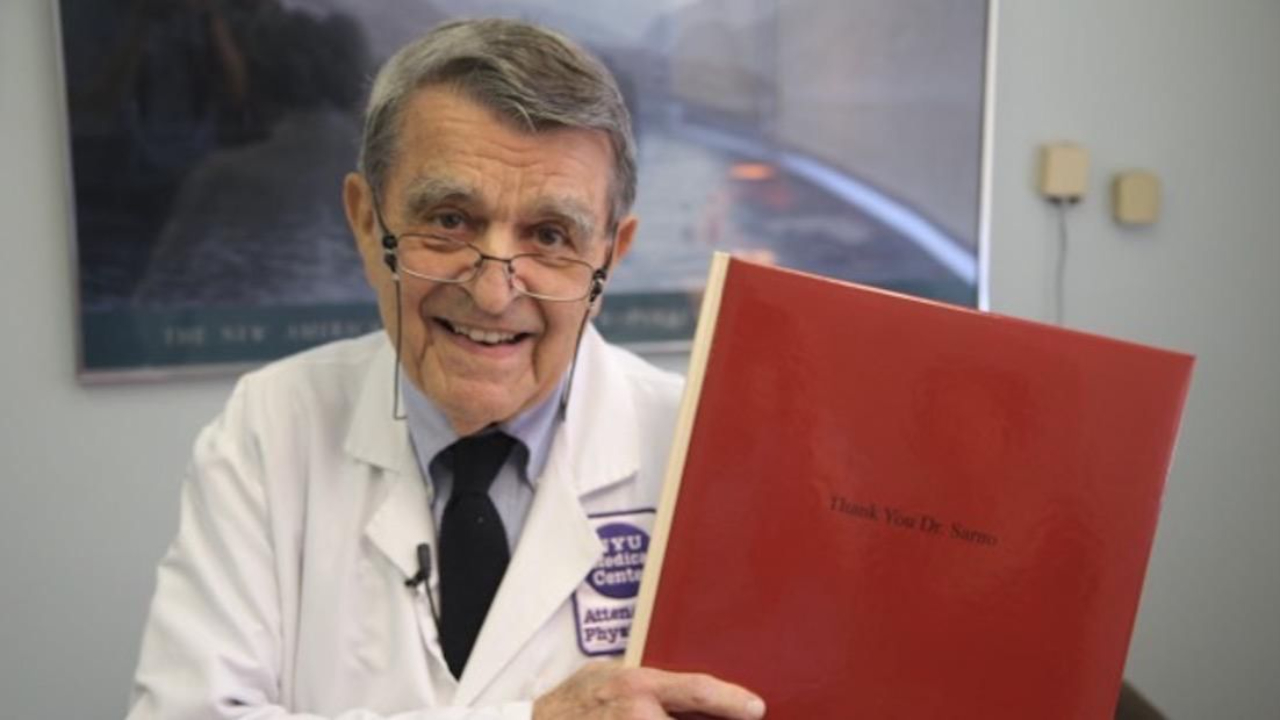
In the first installment of this series, I explored research showing that many structural abnormalities identified on imaging studies are also found in large numbers of people who report no pain at all. Those findings do not mean that tissues are irrelevant. Injuries are real. Degeneration is real. Arthritis is real. What the research suggests is that structure alone often fails to explain the full complexity of chronic pain.
As a bodyworker, anatomy teacher, yoga educator, and occasional pain patient, this is a question I have wrestled with for decades. My search for answers eventually led me, like many others, to the work of Dr. John Sarno, whose ideas challenged many of the assumptions underlying modern rehabilitative medicine.
My own experience with Sarno’s ideas became unexpectedly personal. Following the cognitive decline of my teacher, T.K.V. Desikachar, I spent years carrying a mixture of grief, anger, and helplessness that I neither fully understood nor consciously expressed. Looking back, I can recognize that there was a knot in my gut that gripped a little tighter every time I mentioned Desikachar’s name in a lecture or workshop. Eventually, during a period of increasingly severe back spasms, those unresolved feelings surfaced in a vivid dream that led me to write an article I had apparently been composing unconsciously for years. When my partner (and editor) Lydia read the draft, her feedback was that I could not publish it because it was “full of rage.”
Something shifted the moment she said the word "rage." The back spasm that had been gripping me for weeks released, and the first words out of my mouth were: “Fucking Sarno… he was right!”
For readers interested in the full story, I described the experience in detail during an interview for the Curable podcast, which you can read or listen to here.
That experience did not convince me that Sarno was completely right, but it did confirm that he was on to something important because he identified a major blind spot in conventional medicine. Decades before mind-body approaches to pain entered mainstream clinical conversation, he was challenging the assumption that chronic pain could always be explained by structural abnormalities. He recognized that fear, attention, emotional conflict, and personal history could influence symptoms in ways that many clinicians were unwilling to acknowledge. In doing so, he created a new diagnosis—Tension Myositis Syndrome (TMS)—that helped thousands of people question frightening diagnoses and reconsider the stories they had been told about their bodies.
It is important to note that Sarno did not regard TMS as an imaginary condition. He proposed a physical mechanism whereby unconscious emotional conflict produced mild tissue ischemia, leading to genuine pain and other symptoms. Whether or not that specific explanation ultimately proves correct, Sarno was proposing a true mind-body mechanism, not dismissing symptoms as “all in someone’s head.”
Where I part company with Sarno is in how that relationship between emotion and pain is understood. While he tended to frame the problem primarily in psychological terms and focused treatment on the cognitive recognition of repressed emotions and unconscious conflict, my own experience has led me toward a more embodied view.
Emotions do not exist only in the mind. They are lived through the body. Looking back, that knot in my gut was every bit as real as the thoughts I was having about my teacher, even though I failed to recognize its significance at the time.
We do not suppress emotions merely by refusing to think about them. We suppress them through physical actions that alter breathing, posture, movement, muscle tone, facial expression, and even our relationship to gravity. It is not as though we simply flip a switch in the brain and stop feeling what we are feeling. Whatever mechanisms we use to suppress emotion are themselves fully embodied.
This distinction may seem subtle, but I believe it has profound implications. The imaging studies discussed in the previous article challenged the assumption that pain can always be explained by what appears on a scan. My own experience challenged the assumption that pain can be explained solely by what appears in the mind. The territory is vastly larger than either explanation.
John Sarno recognized something important that much of medicine had overlooked, and for that I believe he deserves enormous credit. His ideas have since been carried forward, challenged, revised, and expanded by a number of clinicians and researchers, including Frances Sommer Anderson, David Schechter, Howard Schubiner, David Clarke, Georgie Oldfield, Alan Gordon, and others. Some have remained close to Sarno’s original psychodynamic framework, while others have integrated contemporary neuroscience, pain science, and behavioral medicine into their models.
Taken together, this growing body of work represents one of the most significant challenges to purely structural explanations of chronic pain. Yet important questions remain. Have these newer approaches corrected the weaknesses in Sarno’s original model, or simply reframed them? Have they successfully integrated the body into the conversation, or have they merely relocated the explanation from the spine to the brain?
In the next installment, I will examine some of these newer approaches and explore why a deeper understanding of the role of breath may offer an important missing piece in understanding the relationship between pain, emotion, and the lived experience of being human.
If you have received value from my writing, please consider supporting it by subscribing to my online community. You will gain access to my online courses, monthly Q&A Zoom chats, and hundreds of hours of educational content.
Here is some related content from my e-Sutra archives:
Podcast: “Even Yoga Masters Break Down Sometimes”
Stay connected with news and updates
Join our mailing list to receive news and updates from Leslie.
Don't worry, your information will not be shared.
We hate SPAM. We will never sell your information, for any reason.