
When Science Studies Our Bodies, Do Our Cues Lose Their Humanity?
May 10, 2026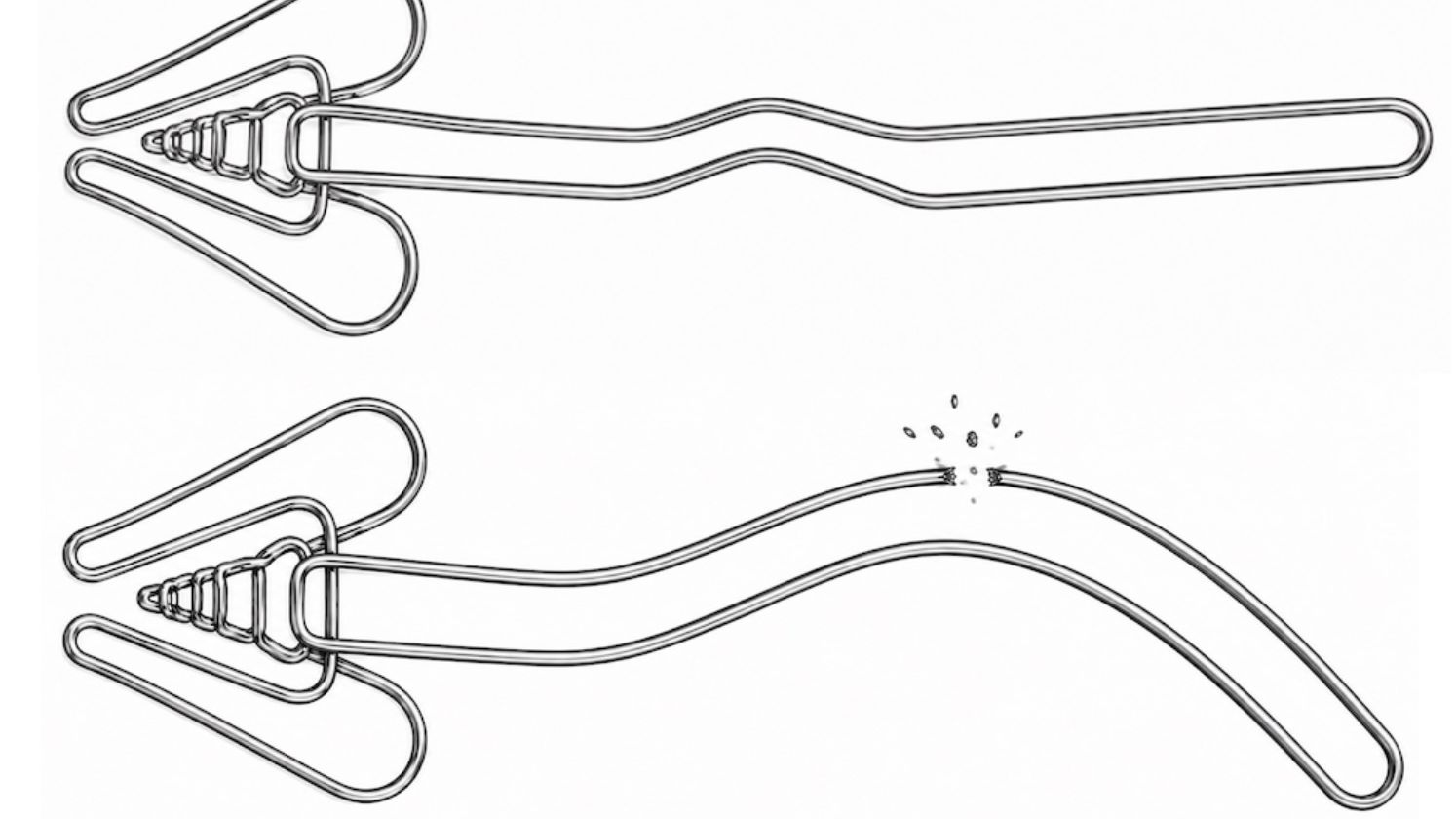
At the 2022 Fascia Research Congress in Montreal, I watched a presentation by Dr. Mark Driscoll from the biomechanics group at McGill University* His team had built a sophisticated computational model of the spine, mapping force transmission through discs, fascia, muscles, vertebrae, and pressure systems under various loading conditions. As an engineering exercise, it was genuinely impressive. As a map of living human movement, it left me cold.
The deeper he got into the demo, the more I noticed what had been removed to make the model work.
After the session, I asked Dr. Driscoll whether his model accounted for breathing — if it could view the torso as a continuously pressure-regulated system. His answer was honest and a little wistful: "Not yet, but we're working on it." I recall thinking: “good luck with that.”
This is not a criticism of scientific research itself. I am drawing attention to a problem that arises when laboratory findings migrate into yoga teaching culture — and the missing variables, the deeply individual human variables, get forgotten.
Ironically, the researchers at McGill know this. They actively work to move beyond earlier limits by incorporating intramuscular pressure, intra-abdominal pressure, thoracolumbar fascia, and more representative soft tissue behavior into their simulations. They describe their models openly as "...numerical approximations operating within a constrained validation scope..." in other words, incomplete portraits of living movement.
The problem they are recognizing is that these complex, interactive elements are intrinsically unique to each body, time and place. Their published paper noted that "the exact material properties of a patient's soft tissues are, probably, as unique as his or her DNA." That level of uniqueness, by definition, resists scientific generalization.
Scientists are extremely careful with their language in order to maintain the context from which mechanical observations emerge. And yet, once findings leave the lab, that nuance tends to evaporate, and when referenced for teaching movement, there is a significant risk of losing that context, oversimplifying complex scenarios or turning them into generic warnings about "damaging your vertebral discs."
Cadaver studies demonstrating tissue failure under repetitive loaded flexion should never be generalized into rules like "never round your spine." Historically, what began as constrained, conditional research gradually became fear-based cueing that treats the spine as fragile and perpetually at risk.
You may have encountered one of the most absurd examples of this in the “paper clip analogy.” Someone asks why they’ve been told to never move from a deep backbend to a deep forward bend, and the response goes something like: “What happens when you bend a paper clip back and forth enough times? It snaps!”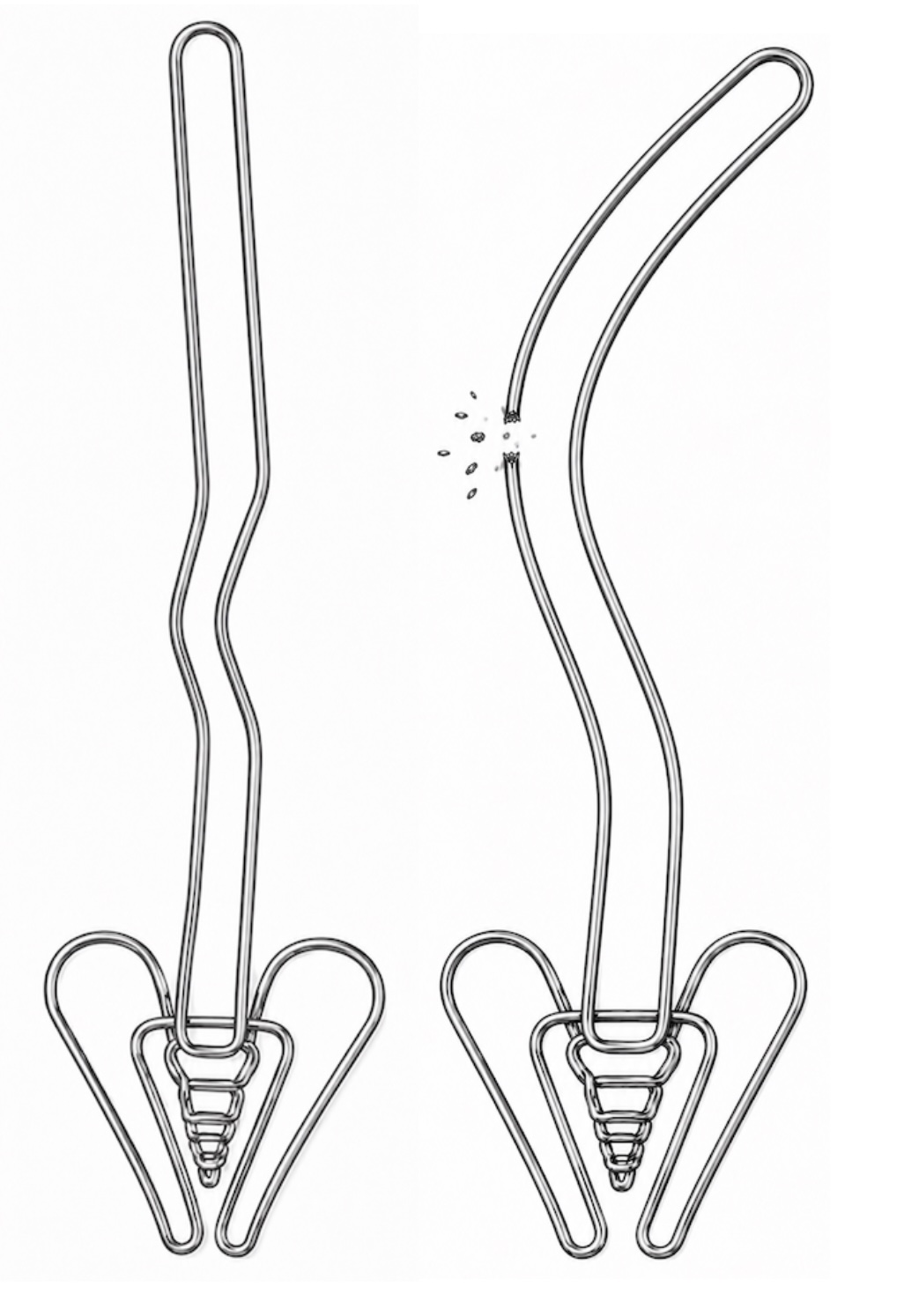
This analogy only works if you strip away everything we know about spines and what makes them fundamentally different from a paper clip. A thin strip of wire is inert, uniform, and incapable of adaptation. It cannot sense load, redistribute force, change recruitment patterns, heal, remodel, or learn. Your entire body – spine included – does all of these things, continuously and adaptively.
Well-taught yoga recognizes that healthy movement is broadly distributed throughout an integrated, living, multidimensional system – the opposite of how concentrated, isolated segments fail under repetitive mechanical stress in the laboratory.
I addressed this very issue during our March 2026 Zoom Q&A when Aviva asked me about the "paper clip" analogy – except she was taught it by comparing the spine to a bent credit card.
This is where real harm can enter yoga teaching in the name of science. When teachers use deeply flawed analogies based on out-of-context research findings that examined parts, not the whole of a living system, it can lead to incorrect assumptions about our bodies as structurally vulnerable. This, in turn, leads to students approaching movement through fear and guarding rather than adaptability and sensory intelligence.
As movement educators, do we really want to teach our students to distrust their own felt experience in favor of rigid rules for movement derived from lab conditions that barely resemble ordinary human life?
Breath, sensation, adaptation, variability, responsiveness — these are precisely what yoga, at its best, restores. They are also exactly what a sterilized model cannot contain. Applying laboratory science to the living, breathing human body is not inherently wrong, but forgetting what got left out is.
*This is not the same “McGill” most people associate with spinal flexion warnings and “neutral spine” doctrine. Those ideas are more closely associated with Stuart McGill at the University of Waterloo, whose porcine and human cadaveric, repetitive-loading studies became highly influential in rehabilitation and movement culture.
If you have received value from my writing, please consider supporting it by subscribing to my online community. You will gain access to my online courses, monthly Q&A Zoom chats, and hundreds of hours of educational content.
Stay connected with news and updates
Join our mailing list to receive news and updates from Leslie.
Don't worry, your information will not be shared.
We hate SPAM. We will never sell your information, for any reason.