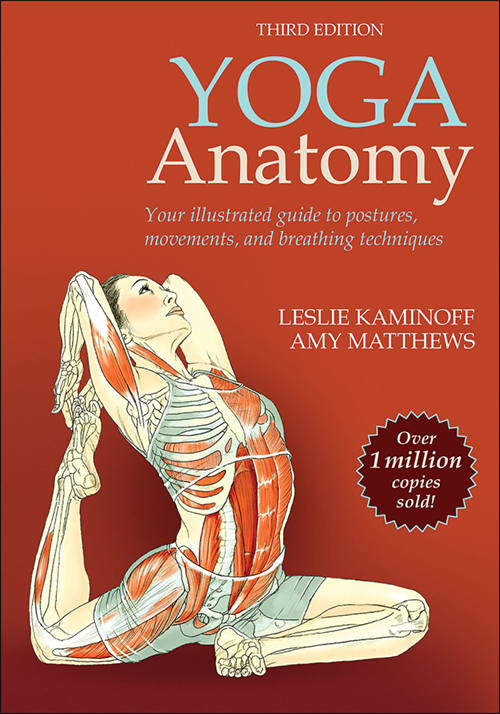

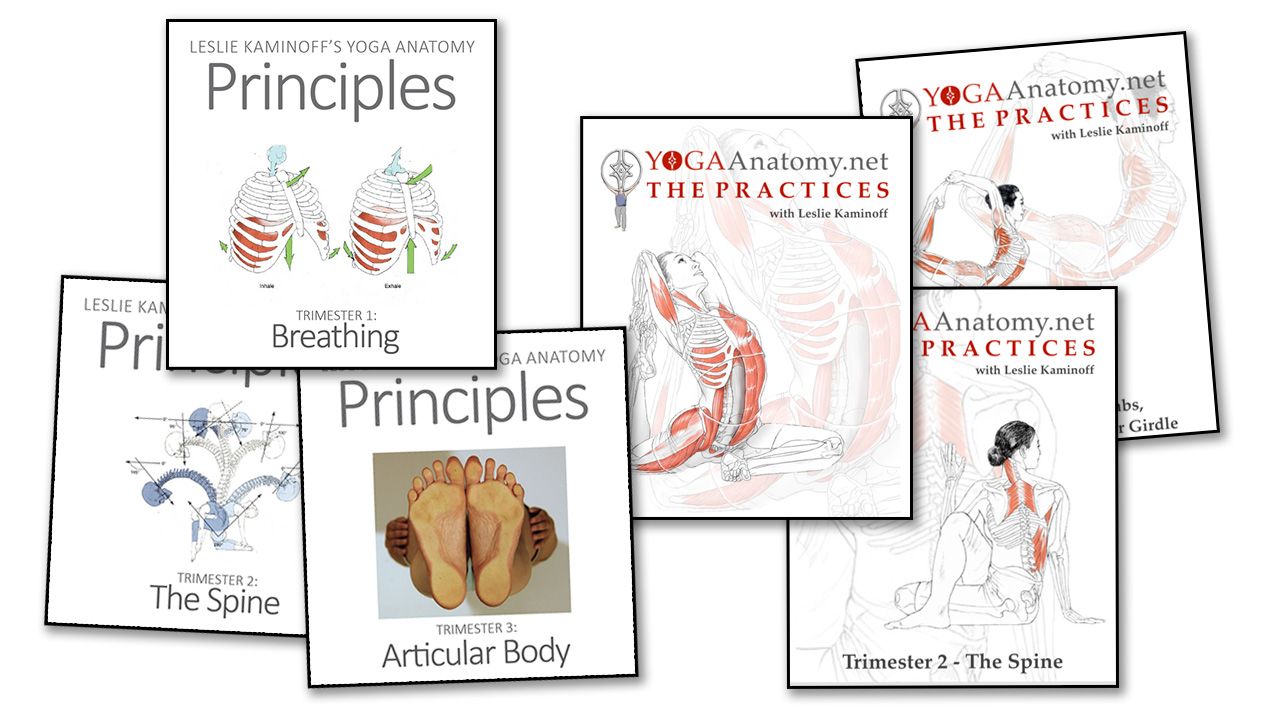
The Practices course is divided into three trimesters containing over 72 hours of material.
Trimester 1: Breath
Tri 1, Practice 1:
Foundations & Origins
- Lineage and teaching tradition.
- The student is never wrong.
- Vi Yoga: separation before union.
- Practice structure mirrors teaching philosophy.
Tri 1, Practice 2:
Cellular Breathing
- The cell as a model for life.
- Integrity and relationship.
- Cellular consciousness as a movement prompt.
- Quieting the brain benefits the whole body.
- Teaching this way is countercultural.
Tri 1, Practice 3:
Breath as Shape-Change — Being Breathed by Movement
- Breathing is shape-change.
- The belly breath misconception.
- Everyone uses their diaphragm.
- Let the movement breathe you.
- Yoga instructor vs. yoga teacher.
Tri 1, Practice 4:
The Yoga of the 3-D Diaphragm
This practice centers on the diaphragm as the engine of three-dimensional breathing. Key points include:
- Breath is three-dimensional shape change.
- The diaphragm lifts the rib cage from inside.
- "Diaphragmatic breathing" is a misleading term.
- Arm movements and hand gestures steer breath dimensionally.
- The practice culminates in a spherical breath visualization.
Tri 1, Practice 5:
The Accessory Muscles and Kapalabhati
This practice reframes breath training as accessory muscle retraining rather than diaphragm strengthening. Key points include:
- The diaphragm is the engine; accessory muscles are the steering.
- "Red" vs. "blue" muscles.
- The cheetah analogy.
- Kapalabhati is an active exhale with a passive inhale.
- Bandhas arise naturally from correct setup.
Tri 1, Practice 6:
Breath Counts — Sama Vritti Pranayama
This practice introduces counted equal-ratio breathing, anchored by a pivotal story from Leslie's own training. Key points include:
- Leslie's transformational breath with Desikachar.
- Top-down inhale, bottom-up exhale.
- Sama Vritti uses equal inhale and exhale counts, extended gradually.
- No pranayama has a universal effect.
- Guest presentation on accessible yoga therapy.
Tri 1, Practice 7:
Brmhana / Langhana — Fundamental Energetics of Breath
This practice introduces the Ayurvedic concepts of brmhana (expanding/building energy) and langhana (releasing/reducing energy) as a framework for understanding breath, movement, and sequencing in yoga practice.
- Brmhana vs. Langhana as a practical teaching tool.
- Breath ratios shift the energetic balance.
- Meet students where they are before moving them.
- Emotional states map onto this framework.
- How you teach is itself brmhana or langhana.
Tri 1, Practice 8:
The Power of Sound and Sanskrit — with Special Guest Krishna Das
Rather than a standard anatomy lesson, this session features an extended conversation and kirtan (call-and-response chanting) with musician and bhakti teacher Krishna Das, exploring how chanting functions as a contemplative and transformative practice.
- Chanting as an anchor, not a belief system.
- The names generate inner gravity over time.
- Chanting must be done with others to fully work.
- The guru relationship as a doorway to inner love.
- Simple, consistent practice outweighs intensity.
Tri 1, Practice 9:
Mula Bandha and the Pelvic Floor
This practice explores the anatomical and functional basis of Mula Bandha, reframing it not as a static muscular lock but as a dynamic, breath-integrated source of support that underlies all movement.
- Bandha as a pressure-regulating gate, not a static lock.
- Mula Bandha is distinct from the anal sphincter.
- The three bandhas are one integrated gesture.
- Space above makes lift below possible.
- If you can breathe and move smoothly together, you're already doing the bandhas.
Tri 1, Practice 10:
Exploring Bandhas in Support and Movement
- Bandhas as hydraulics, not just muscle contractions.
- Breath-movement timing as the entry point.
- Directional flow of breath forces.
- Interrelatedness of all three bandhas.
- Multi-dimensional context via the Pancha Maya model.
Tri 1, Lesson 11:
Kundalini & Chakras — A Practical Approach
- Chakras as symbolic shorthand, not literal structures.
- Krishnamacharya's alternative view of kundalini.
- Breath as inner fire ritual (swaha).
- Sushumna as the balanced center between sympathetic and parasympathetic.
- Inversions as a functional tool within this framework.
Trimester 1, Lesson 12:
Yoga from the Core — with Special Guest Sadie Nardini
- The deep core line as the true generator of movement.
- Foundation → core → expression as a universal sequencing principle.
- Stabilization does not mean immobilization.
- Inner and outer body as sthira and sukha.
- The "golden flame" breath as a teaching tool.
Trimester 2: Spine
Tri 2, Practice 13:
Exploring the Evolution and Development of the Human Spine
This practice opens the winter trimester with an experiential exploration of why spines exist and how they evolved. The practice involves embodying different stages of evolutionary development — from single-celled organisms to bipeds — through movement.
- The spine exists to protect the central nervous system while allowing movement.
- Sthira and sukha (stability and mobility) are the organizing principles.
- Spinal curves evolved in sequence.
- Human development recapitulates evolutionary history.
- The spine is central, not posterior.
Tri 2, Practice 14:
Your Back Has a Front
Building on the previous week, this practice explores the architectural principles of the spine and introduces the anterior/posterior column framework as a basis for practice, primarily through roll-down/roll-up explorations.
- The torso is a self-supporting structure.
- The spine has two functional columns.
- Shifting focus from posterior to anterior column changes everything.
- "Back pain" is often a front problem.
- Leslie publicly corrects his own error about cervical rotation ranges.
Tri 2, Practice 15:
Moving the Spine Through Space vs. Moving Space Through the Spine
This practice introduces a key conceptual distinction: moving the spine as a unit through space versus articulating it so that movement travels through each segment. The practice uses standing forward folds, Chakravakasana, bridge pose, and cobra to explore this difference.
- "Forward bend" and "backbend" are ambiguous terms.
- Spatial instructions produce different articulation than breath-centered ones.
- Integrating articulation with spatial movement is the real skill.
- Breath pattern and spinal articulation are inseparable.
- Leslie's book review of "The Science of Yoga" concludes the trilogy.
Tri 2, Practice 16:
Twist & Bend 2 — Axial Rotation & Lateral Flexion
This practice explores how the spine actually moves during twisting and side-bending, challenging common assumptions in yoga practice.
- Spinal rotation is unevenly distributed.
- "Normal" range of motion is highly variable.
- Lateral flexion and axial rotation are coupled.
- Where movement comes from matters more than how far you go.
- Breath and rib cage flexibility directly affect spinal rotation.
Tri 2, Practice 17:
Balancing Flexion & Extension in the Spine — with guest teacher Amy Matthews
Guest teacher Amy Matthews leads a practice and discussion centered on developing precise awareness of how the spine articulates, with an emphasis on sequencing and conscious choice-making.
- Articulating in a joint is distinct from moving that joint through space.
- Sequential spinal movement is more integrative than block movement.
- Listening for the sensation of movement, not stretch, changes what's accessible.
- Consciousness and choice are the real goals, not any particular shape.
- Progressive loading builds proprioceptive support independent of vision.
Tri 2, Practice 18:
Yoga and the Emotional Body — Listening to the Gut
This practice weaves together anatomical research on back pain, yogic models of the body, and somatic practices to explore the relationship between emotional repression and physical pain.
- Disc damage does not reliably explain back pain.
- Dispersed prana — being "outside the body" — underlies much chronic pain.
- The Pancha Maya model offers a practical map for understanding how yoga works.
- Protective tension is self-reinforcing and ultimately counterproductive.
- The gut has intelligence worth consulting.
Tri 2, Practice 19:
Mahamudra, Axial Extension & Susumna
Explores axial extension as a fifth spinal movement distinct from the standard four, and uses the practice of Mahamudra to locate the body's central breathing channel.
- Axial extension as a unique movement
- Mahamudra as a bridge pose
- Being breathed vs. breathing
- Healthy spines must move
- Pain, protection & the emotional body
Tri 2, Practice 20:
Balance, Symmetry & Deconstructing Spirals
Draws a precise conceptual distinction between balance and symmetry, then uses experiential exercises to reveal the compensatory spirals embedded in every body.
- Symmetry ≠ balance
- Spirals are structural and developmental
- Uncovering compensatory patterns
- Warrior poses as spiral mechanics
- Asymmetrical Savasana as practice
Tri 2, Practice 21:
Scoliosis & Spirals — Breaking the Tyranny of the Rectangular Yoga Space
Applies the spirals framework directly to scoliosis, featuring two students with diagnosed curves, and proposes movement-based strategies that work with — rather than against — inherent spinal asymmetry.
- Scoliosis as a spiral problem
- Sensory input shapes movement
- Shorter base, freer spine
- Breaking the rectangular yoga mat mindset
- Teaching philosophy — observe more, correct less
Tri 2, Practice 22:
The psoas as a sensory organ
- Sensory over mechanical framing.
- The "high-waisted crotch" image.
- Deep frontline continuity.
- Warrior poses without "doing" the psoas.
- Floor work and waterfall imagery.
Tri 2, Practice 23:
Exploring the dualities of our system
- Balancing dualities as a core yoga framework.
- The brain constructs reality.
- Visual field and proprioception in standing practice.
- Crossing the midline.
- "Alternate lung breathing."
Tri 2, Practice 24:
A warrior series
- Building from the ground up, not prop-and-drop.
- A unified stance across all Warriors.
- Arm spirals follow breath, not instruction.
- Sthira/sukha made tangible.
- Pranayama closes the sequence.
Trimester 3: Limbs
Tri 3, Practice 25:
The Fore Limbs of Yoga — Synopsis
- Lower vs. Upper Limb Function
- Learn to Stand on Your Feet Before You Stand on Your Hands
- Hand and Foot as Mirror Images
- Breath as the Organizer of Movement
- The Shoulder Girdle Must Track the Arm
Tri 3, Practice 26:
The Architecture of the Foot — Three Points, Three Arches
- The foot as a triangular tripod.
- Three arches, not one.
- Intrinsic vs. extrinsic muscle support.
- Proprioceptive feedback matters.
- Proactive vs. reactive foot movement.
Tri 3, Practice 27:
Plugging the Feet into the Spine — A Powerline to the Core
- The deep front line as a continuous pathway.
- Stabilizing vs. immobilizing — the sthira-sukha balance.
- Initiating movement from the feet vs. from the center.
- The diaphragm as a missing piece in back-pain conversations.
- Strengthening as "currenting," not just muscle-targeting.
Tri 3, Practice 28:
Balance and Equilibrium — BOS, COG, ROM
This practice explores the foundational concepts of Base of Support, Center of Gravity, and Range of Motion as they apply to yoga practice and teaching.
- Base of Support is always present.
- Center of gravity is more nuanced for living bodies.
- Stability is subjective, not purely mechanical.
- The BOS–COG–ROM hierarchy matters in teaching.
- Core means breath coordination, not crunches.
Tri 3, Practice 29:
When the Knees Talk, Smart Yogis Listen
This practice dives into knee anatomy, common injuries, and practical approaches to protecting the joint in yoga practice.
- The knee is not a simple hinge joint.
- The soleus (not just the gastroc) limits ankle flexion — and squat depth.
- How you arrive in a pose determines what you feel there.
- Pain inside a joint is a stop signal; muscular sensation is workable.
- Lotus and deep knee flexion poses carry real risk.
Tri 3, Practice 30:
The Articulate Pelvis – Pelvic Halves & the Sacrum
This practice focuses on understanding the pelvis not as a single rigid block, but as a collection of articulating parts with meaningful independent movement.
- The pelvic halves are embryologically part of the legs.
- Nutation vs. counter-nutation at the SI joints.
- Sitting posture is a major culprit in SI joint dysfunction.
- The sacrum should remain neutral while the pelvic halves articulate freely.
- Breath is the key to accessing pelvic articulation.
Tri 3, Practice 31:
Putting It All Together – The Warrior Series
This practice integrates everything covered from the feet up through the pelvis into a complete standing sequence — the Warrior Series — with no weight-bearing on the hands at any point.
- Asymmetry in the pelvis is normal and universal.
- How you enter a pose determines what you experience in it.
- The Warrior Series covers all spinal movements from a standing base.
- Alignment cues are most effective when connected to the breath.
- Naming poses activates preloaded mental "file folders" that can hinder authentic movement.
Tri 3, Practice 32:
Double Spirals & Half-Arm Support
- Arm supports are intermediate-level skills.
- The shoulder girdle is an "exploded" version of the pelvic girdle.
- The double spiral is essential for safe arm support.
- The breath drives the core support, not arm strength.
- Distribute movement across many joints rather than concentrating it in a few.
Tri 3, Practice 33:
Inversions & Pathways of Weight
- Fear in inversions stems from disorientation, not just physical risk.
- Weight travels through the front of the spine, not the back.
- The embryological origin of the upper limb informs its movement logic.
- Weight travels through the upper limb in a specific pathway.
- Handstand and headstand require the tail to lead, not the legs.
Tri 3, Practice 34:
Final Practice Sequence #1 – Headstand Series
This practice focuses on building a comprehensive practice sequence culminating in headstand, weaving together breathwork, foundational movement, and inversions.
- Breath as movement initiator
- Progressive complexity in warm-ups
- Modified standing poses build strength over flexibility
- Headstand setup prioritizes base before head
- Counterposing should be dynamic, not static
Tri 3, Practice 35:
Final Practice Sequence #2 – Wheel Series
This practice builds toward Urdhva Dhanurasana (Wheel) as the crown pose, with particular attention to breath sequencing, leg mechanics, and exit strategies from deep backbends.
- Delaying the inhale as a practice tool
- Breathing in Wheel is already a full inhale
- Leg mechanics are critical and often overlooked
- Scapular positioning unlocks arm placement
- Camel as an exit strategy laboratory
Tri 3, Practice 36:
Final Practice #3 – Goin' Old School
- The Legacy of Krishnamacharya
- The Gurudakshina and Its Cost
- The Lineage to Desikachar and Leslie
- The "Old School" Sivananda Sequence
- The Importance of Final Relaxation
Ready to go further? Select one of the offers below to join the community.

CONTACT FORM