
Pain, Maps, and Meaning: Part 3 - Steve Kerr’s Story
Jun 28, 2026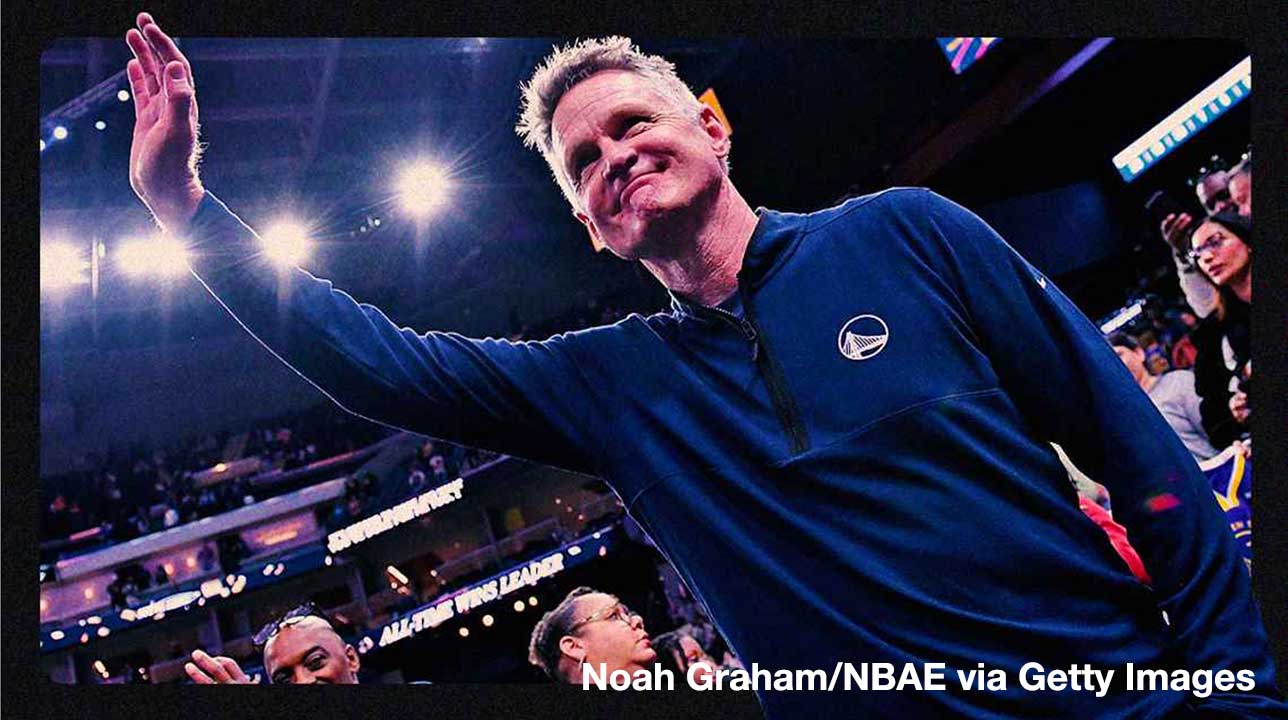
In May of this year, ESPN published a remarkable profile of Steve Kerr by Wright Thompson. I expected a story about basketball, but instead, I found myself reading what may be one of the most compelling accounts of chronic pain I have encountered in years. Thompson’s article is ostensibly about Kerr’s uncertain future with the Golden State Warriors, but woven throughout the piece is a deeply personal account of his long struggle with persistent pain, unresolved grief, identity, and meaning.
Steve Kerr’s story offered a vivid illustration of something I have gradually come to believe after decades of teaching, studying anatomy, and working with people in pain: that no single model, however useful, can fully capture the complexity of an individual's lived experience.
Most people know Kerr as the head coach of Steph Curry and the Warriors, where he has presided over one of the great dynasties in professional sports. Before that, he won five NBA championships as a player, sharing locker rooms with Michael Jordan, Tim Duncan, and some of the greatest athletes in the history of the game. What many people do not know is that Kerr has spent much of the past decade living with chronic pain that began after a back surgery in 2015. What followed will sound painfully familiar to many: complications, debilitating headaches, endless consultations, repeated disappointments, trips to major medical centers, experimental treatments, and years spent searching for answers. Even after all that, no one could fully explain his symptoms, let alone offer him relief.
Eventually, Kerr found his way to the work of John Sarno. Later, he connected with Alan Gordon, author of The Way Out, and reported making significant progress. More recently, after hearing psychotherapist Nicole Sachs discuss her work with NBA player Michael Porter Jr., Kerr began a daily practice of expressive writing and meditation. Each morning, he would spend twenty minutes writing about whatever emerged: the assassination of his father by Islamic Jihad when Steve was twenty years old, anger, disappointment, grief, shame, relationships, the pressures of coaching, and the countless frustrations of daily life. When the timer expired, he deleted what he had written, meditated, and then went to coach his team.
According to the article, something shifted. The crushing pressure behind Kerr’s eyes began to recede, and he was able to return to activities he had largely abandoned. At the same time, the reporter makes clear that Kerr has not been miraculously cured. He still speaks openly of living with “literal chronic daily pain” and of the ways in which coaching, relationships, and a sense of shared purpose help him manage it. That detail is especially important because it resists the kind of tidy resolution that so often accompanies stories of recovery.
As I argued in the previous installment of this series, Sarno’s great contribution was to challenge the assumption that pain can be explained by tissue pathology alone. He insisted that emotions, fear and life experience all belong in the conversation. For countless people who had exhausted structural explanations without finding either relief or meaning, Sarno’s ideas opened a conversation that conventional medicine had largely ignored. Even many of Sarno’s critics now acknowledge that he was pointing toward something essential, even if they found his explanations to be incomplete.
The clinicians who have followed in Sarno’s footsteps have refined his work in important ways. Rather than focusing primarily on repressed rage, contemporary approaches such as Emotional Awareness and Expression Therapy, Pain Reprocessing Therapy, and the work of clinicians such as Alan Gordon, Howard Schubiner, David Clarke, and Nicole Sachs have broadened the conversation. Fear, prediction, learned neural pathways, self-compassion, emotional awareness, attachment, and nervous system sensitization are now moving to center stage in discussions of pain. Many people have found genuine and sometimes profound relief through these approaches, and their contributions deserve to be taken seriously.
My purpose here is not to dispute any of this. On the contrary, much of what these clinicians describe is entirely consistent with observations I have made over decades of working with people in pain. What Kerr’s story illustrates so beautifully, however, is that these various perspectives cannot be meaningfully separated from one another in lived experience.
The more carefully one reads Thompson’s account of Steve Kerr's journey, the more difficult it becomes to isolate a single explanatory thread. Were Kerr’s symptoms related to surgery? Almost certainly. Did years of unresolved grief surrounding his father’s assassination matter? How could it not? What about the emotional demands of coaching, the loss of identity and physicality as a player, his perfectionism, his relationships, and his membership in a deeply connected team? Again, it is difficult to imagine that all of these factors did not contribute to his pain.
I have never been fully satisfied with efforts to locate pain within any single domain of human experience. Structural explanations, psychodynamic interpretations, and more recent neuroplastic formulations all illuminate important aspects of pain and offer genuine relief to those who resonate with the stories they tell. Yet each story becomes problematic if we elevate it from a useful map to a comprehensive account of the territory.
In Part One of this series, I suggested that imaging findings, while often informative, cannot by themselves explain the lived experience of pain. In Part Two, I shared my experience, along with John Sarno's, that unresolved emotions, while undeniably important, cannot fully explain pain either. Steve Kerr’s story reinforces my perspective that chronic pain resists any attempt to isolate it within a single domain of human experience.
Frankly, I have never found the language of “mind-body connection” persuasive. The phrase appears constantly in both medicine and yoga, yet it carries an assumption I reject: namely, that mind and body are fundamentally separate things requiring connection in the first place.
My experience in anatomy labs, yoga classrooms, and decades of bodywork has shown me that emotions are not mental events that somehow descend into the body and create physical consequences, but fully embodied processes. Grief is embodied. Fear is embodied. Shame is embodied. Anger is embodied. A frightened person does not simply think differently; they breathe differently, move differently, perceive differently, and organize themselves differently in relation to gravity and the greater world around them.
The same can be said of persistent pain. Chronic pain does not merely alter tissues or neural pathways. It changes breathing, posture, expectation, identity, relationships, and meaning. It changes how we remember the past, imagine the future, and, most importantly, how we inhabit the present. This is what I recognize when I hear Steve Kerr say that coaching “feeds my soul” while helping him cope with his chronic pain. That is a human being describing what it means to live as a person whose physiology, biography, relationships, aspirations, and emotional life cannot be neatly separated from one another.
Pain happens neither to spines nor to brains nor to disembodied minds. Pain happens to people, and people are always more than the sum of the explanatory models we bring to bear on them.
The patient is indivisible.
In the final installment of this series, I will explore what it means to take that proposition seriously.
If you have received value from my writing, please consider supporting it by subscribing to my online community. You will gain access to my online courses, monthly Q&A Zoom chats, and hundreds of hours of educational content.
Stay connected with news and updates
Join our mailing list to receive news and updates from Leslie.
Don't worry, your information will not be shared.
We hate SPAM. We will never sell your information, for any reason.